Apollo 14 Moon Tree
First introduced in the Second Edition of the Mini Museum, we are excited to offer this rare item as a single specimen!
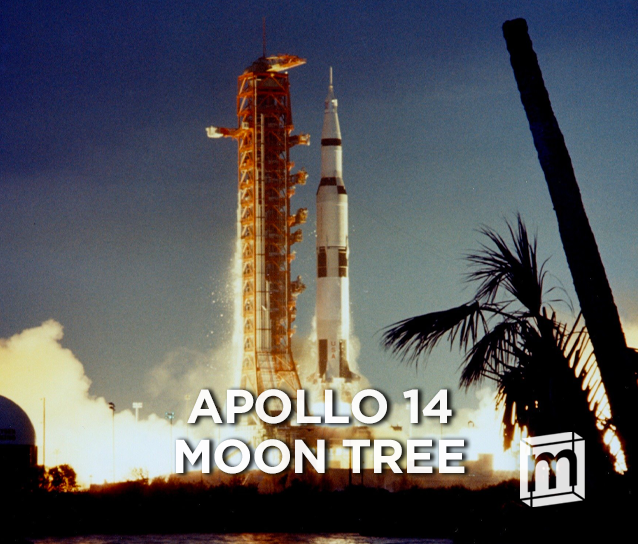
Above: Front of the Specimen Card
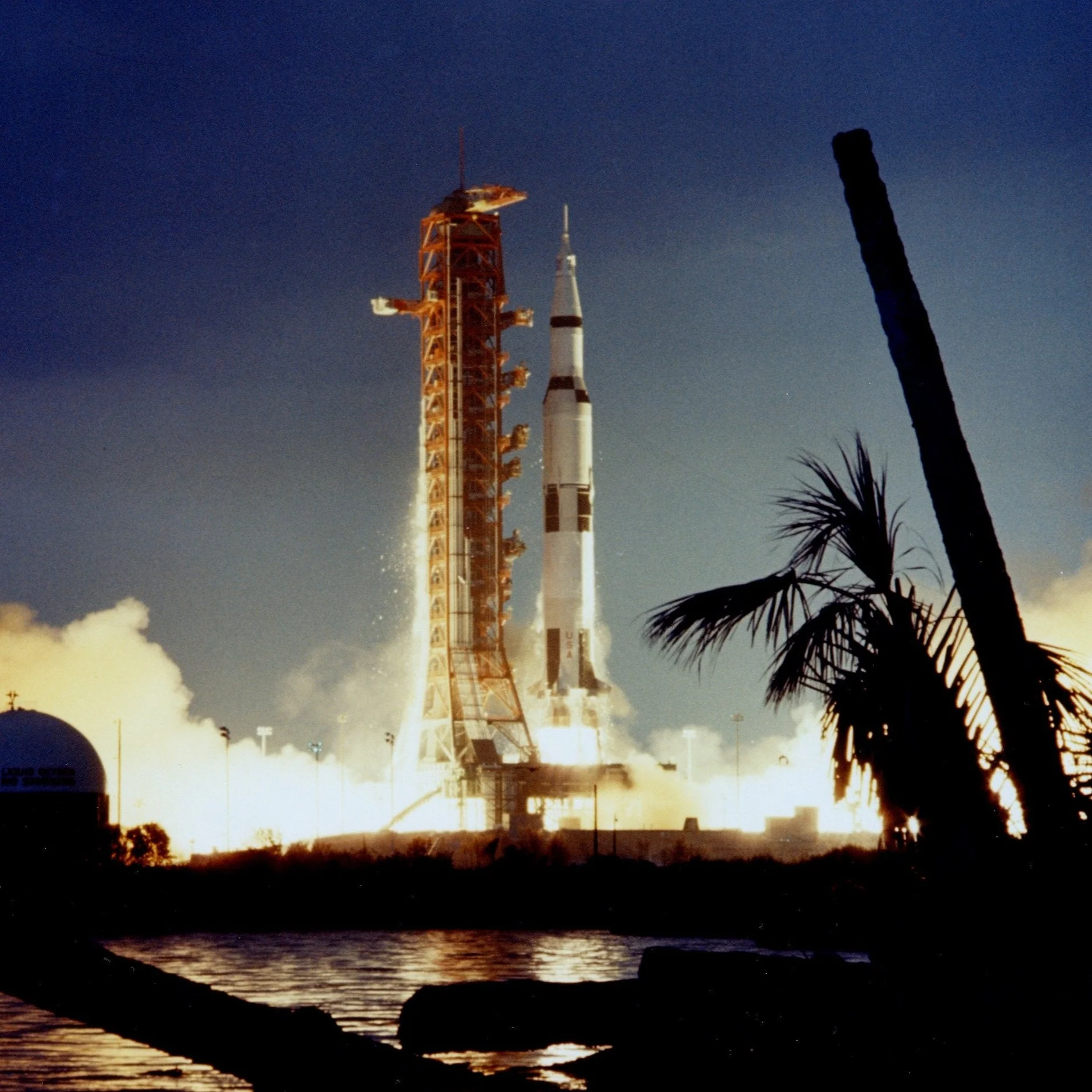
On January 31, 1971, Apollo 14 carried three astronauts to the moon along with hundreds of tree seeds. Upon return, the U.S. forest service successfully germinated a small number of seeds and dispersed the saplings during the bicentennial celebrations of 1975 and 1976.

Above: Moon Tree specimen at home with a Lego Lunar Lander. (Source: Mini Museum)
This specimen comes from a surviving moon tree: a Sycamore living on the campus of the University of Arizona in Tucson, Arizona. In 2014, The tree was damaged in a storm and a fallen limb was preserved by Senior Research Specialist and White House Champion for Change, Dolores Hill.

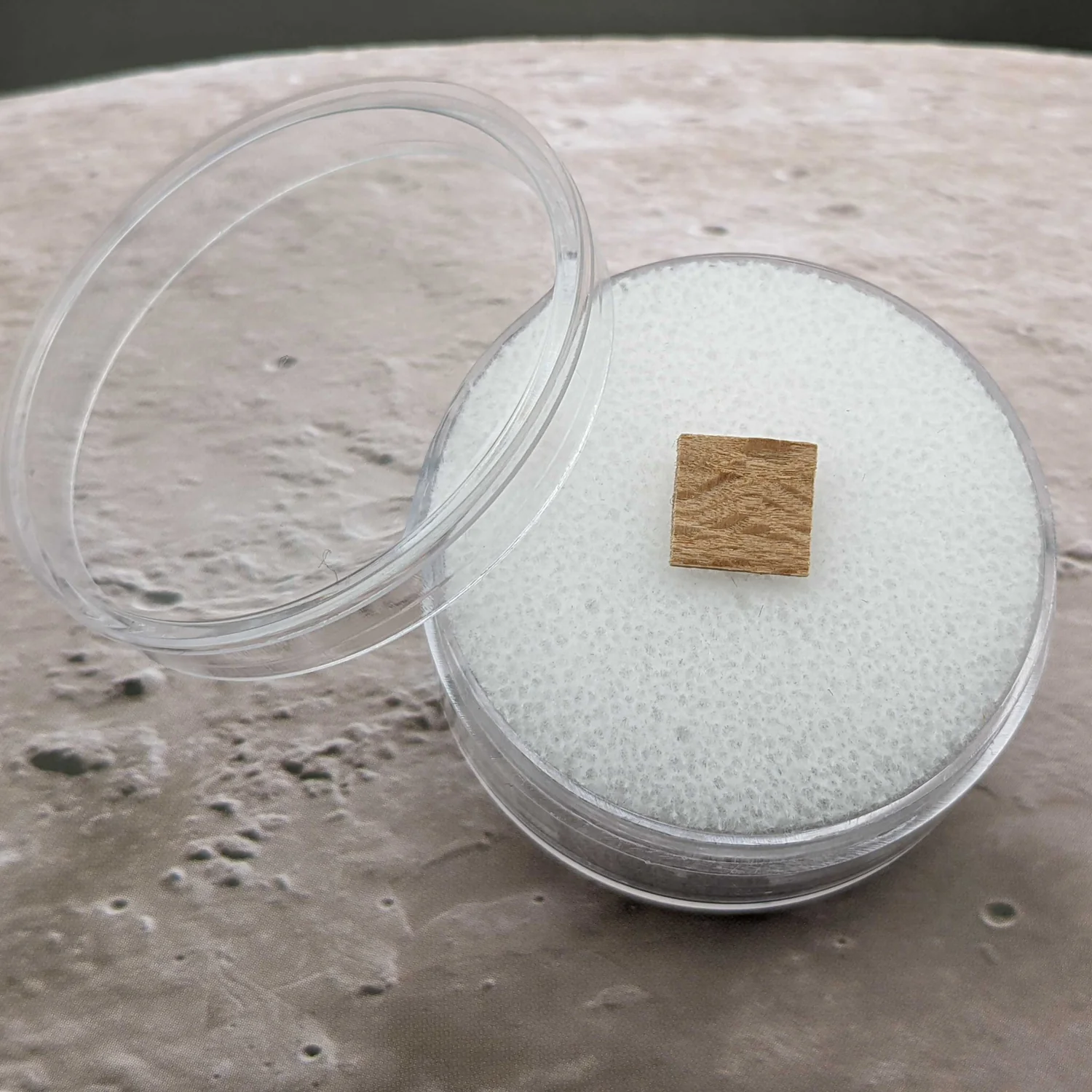
Above: Close-up of the Moon Tree branch cross-section. (Source: Mini Museum)
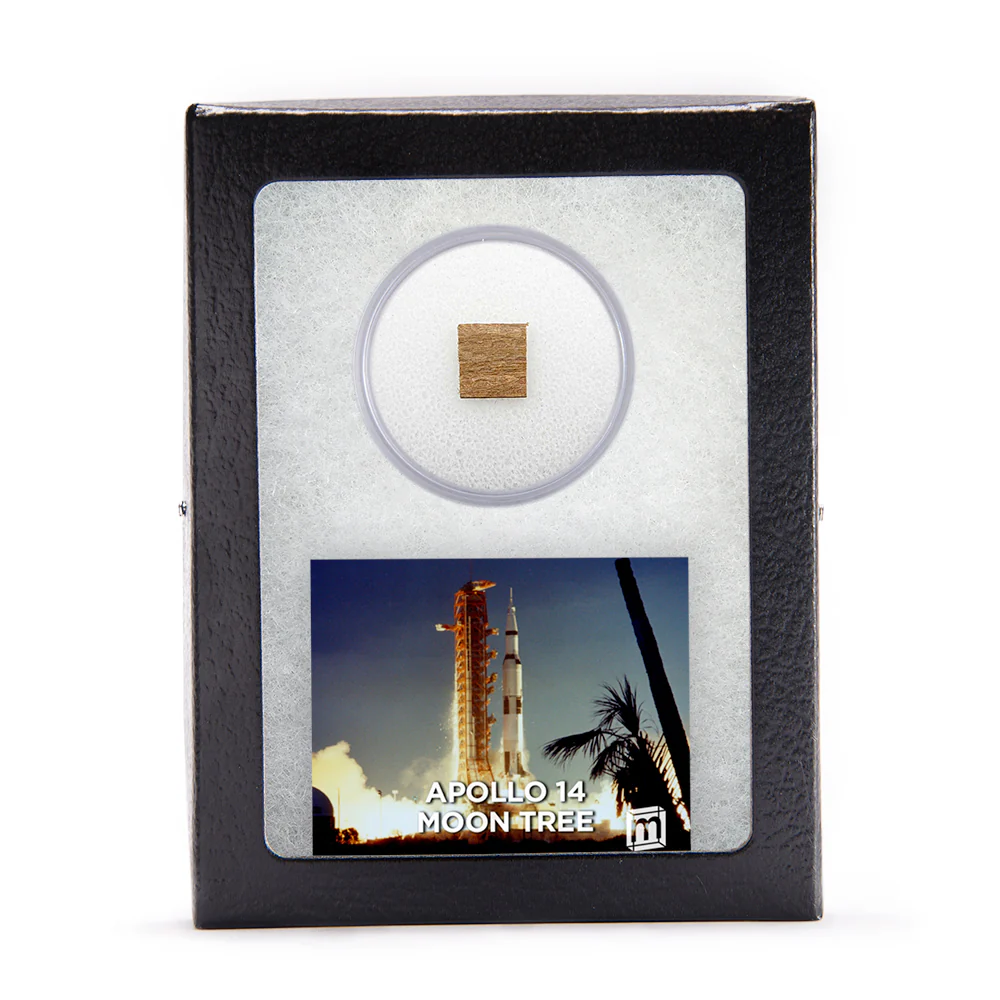
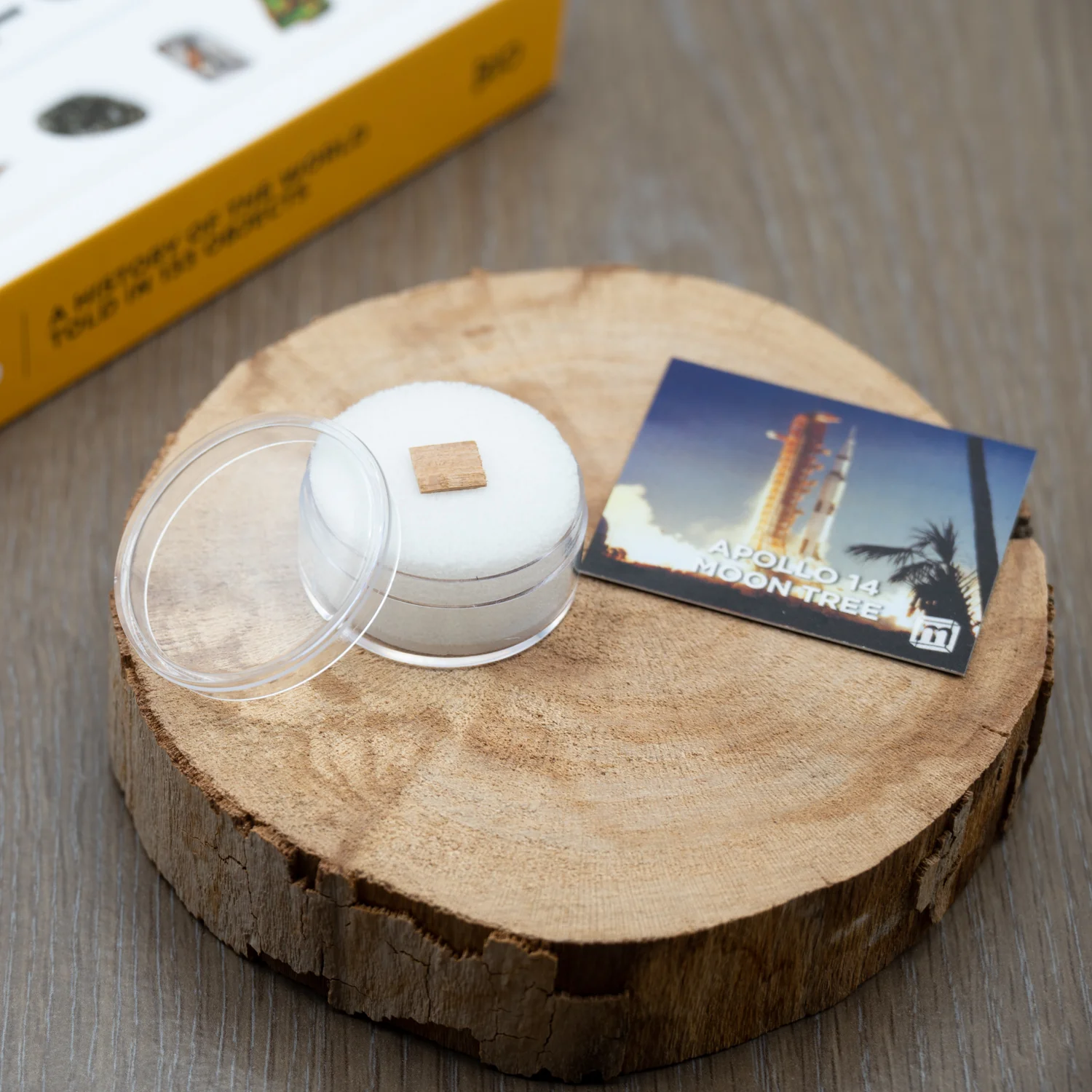
As pictured below, each hand-cut specimen is housed in an acrylic jar and ships in a classic, glass-topped riker display case measuring 4 1/2" x 3 1/2". Individual specimens are all roughly 1x1 cm. A small information card is also included, which serves as the certificate of authenticity.

Above: An example Moon Tree specimen with an information card sitting on top of a cross-cut branch section.
Original: $29.00
-70%$29.00
$8.70More Images
Apollo 14 Moon Tree
First introduced in the Second Edition of the Mini Museum, we are excited to offer this rare item as a single specimen!
Above: Front of the Specimen Card
On January 31, 1971, Apollo 14 carried three astronauts to the moon along with hundreds of tree seeds. Upon return, the U.S. forest service successfully germinated a small number of seeds and dispersed the saplings during the bicentennial celebrations of 1975 and 1976.
Above: Moon Tree specimen at home with a Lego Lunar Lander. (Source: Mini Museum)
This specimen comes from a surviving moon tree: a Sycamore living on the campus of the University of Arizona in Tucson, Arizona. In 2014, The tree was damaged in a storm and a fallen limb was preserved by Senior Research Specialist and White House Champion for Change, Dolores Hill.
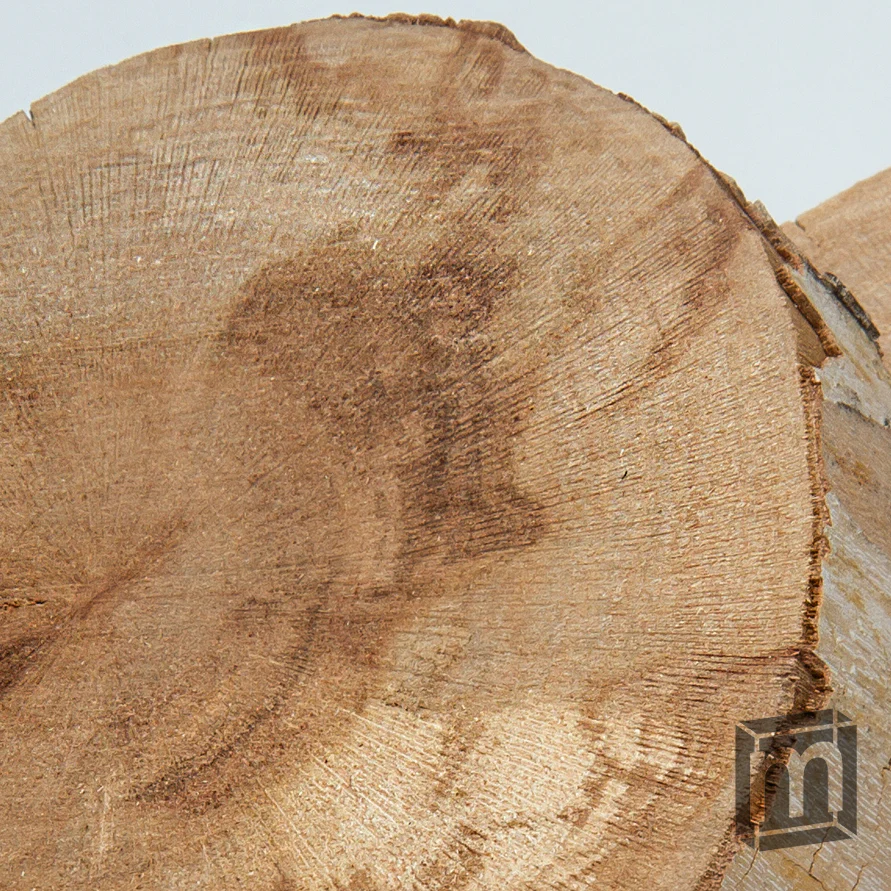
Above: Close-up of the Moon Tree branch cross-section. (Source: Mini Museum)
As pictured below, each hand-cut specimen is housed in an acrylic jar and ships in a classic, glass-topped riker display case measuring 4 1/2" x 3 1/2". Individual specimens are all roughly 1x1 cm. A small information card is also included, which serves as the certificate of authenticity.
Above: An example Moon Tree specimen with an information card sitting on top of a cross-cut branch section.
Product Information
Product Information
Shipping & Returns
Shipping & Returns
Description
First introduced in the Second Edition of the Mini Museum, we are excited to offer this rare item as a single specimen!
Above: Front of the Specimen Card
On January 31, 1971, Apollo 14 carried three astronauts to the moon along with hundreds of tree seeds. Upon return, the U.S. forest service successfully germinated a small number of seeds and dispersed the saplings during the bicentennial celebrations of 1975 and 1976.
Above: Moon Tree specimen at home with a Lego Lunar Lander. (Source: Mini Museum)
This specimen comes from a surviving moon tree: a Sycamore living on the campus of the University of Arizona in Tucson, Arizona. In 2014, The tree was damaged in a storm and a fallen limb was preserved by Senior Research Specialist and White House Champion for Change, Dolores Hill.
Above: Close-up of the Moon Tree branch cross-section. (Source: Mini Museum)
As pictured below, each hand-cut specimen is housed in an acrylic jar and ships in a classic, glass-topped riker display case measuring 4 1/2" x 3 1/2". Individual specimens are all roughly 1x1 cm. A small information card is also included, which serves as the certificate of authenticity.
Above: An example Moon Tree specimen with an information card sitting on top of a cross-cut branch section.