Mammoth Meat - Display Card
Radiocarbon-dated to 19,551 years old!
"Various legends exist about frozen mammoths. It has been said that the scientists who excavated the Beresovka mammoth, discovered in the year 1900, enjoyed a banquet on mammoth steak. What really appears to have happened is that one of them made a heroic attempt to take a bite out of this meat but was unable to keep it down, in spite of a generous use of spices." ~ Björn Kurtén in "How to Deep Freeze a Mammoth"
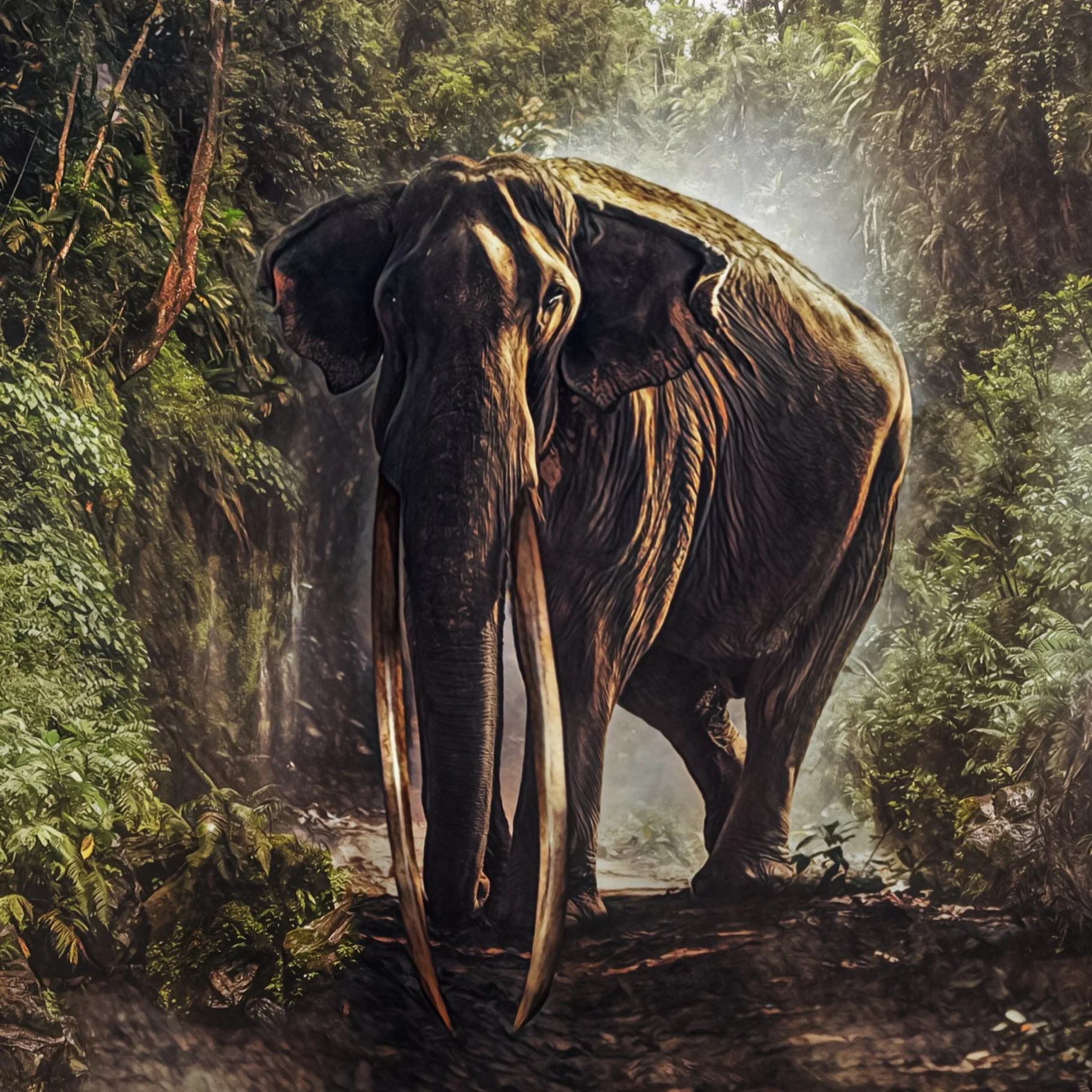
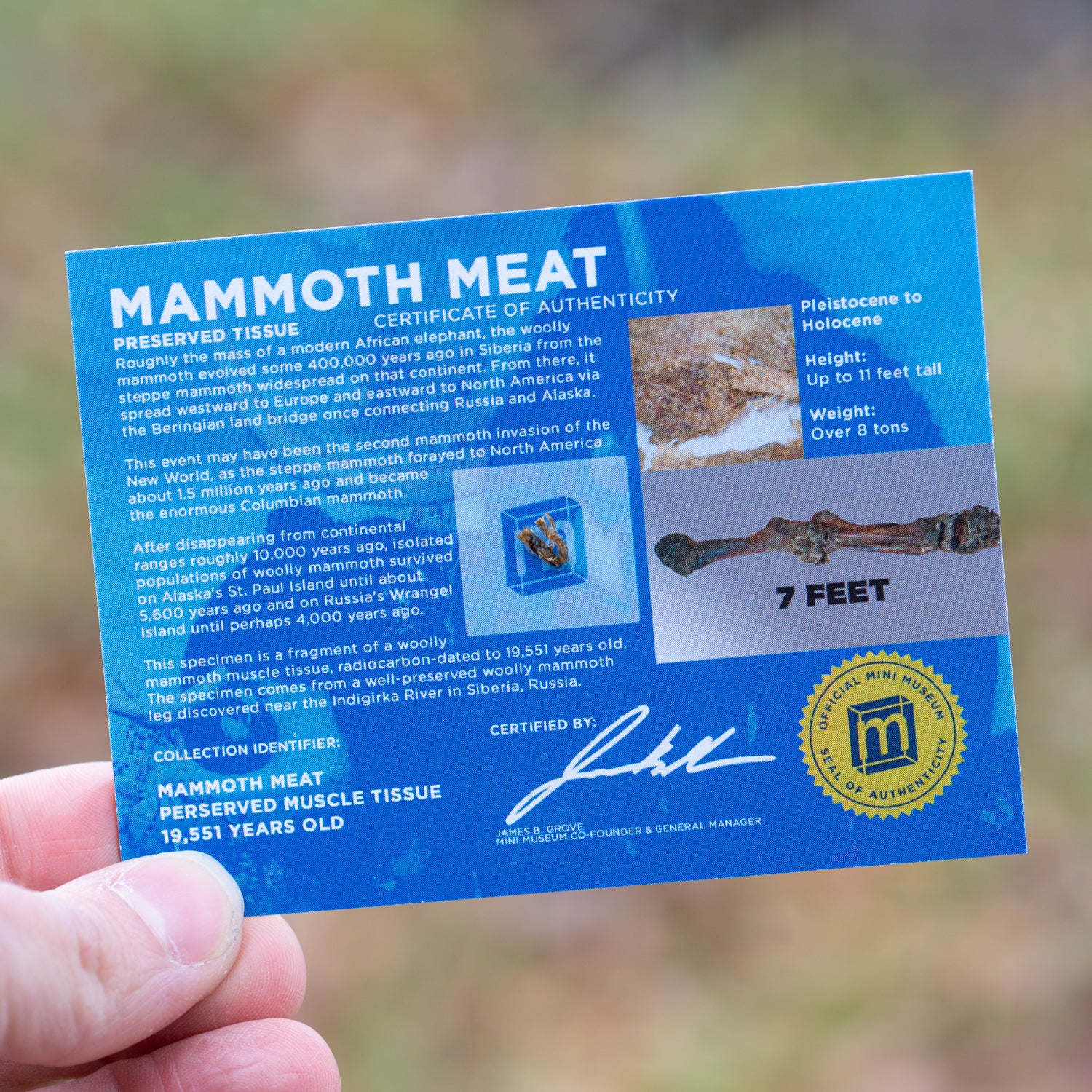
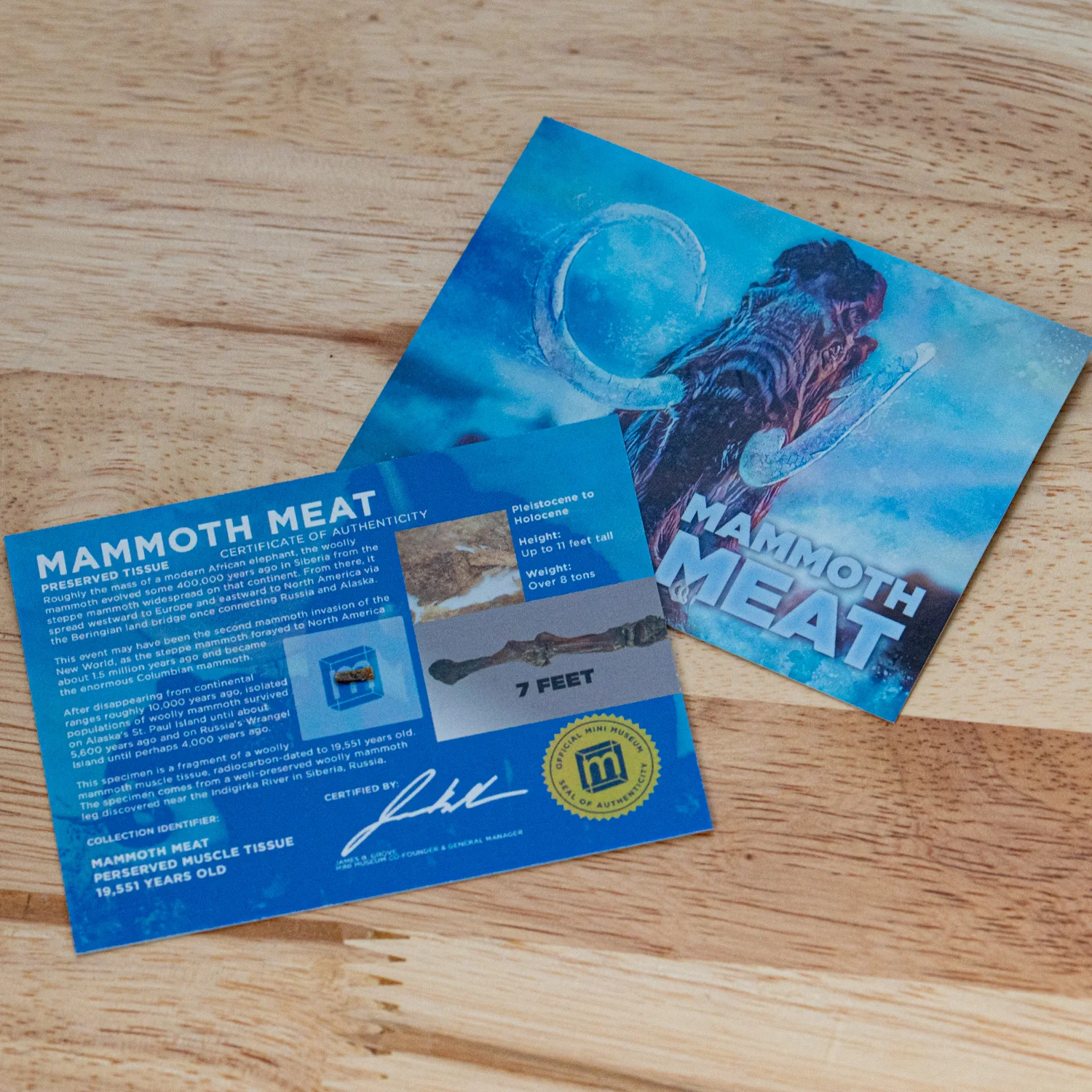
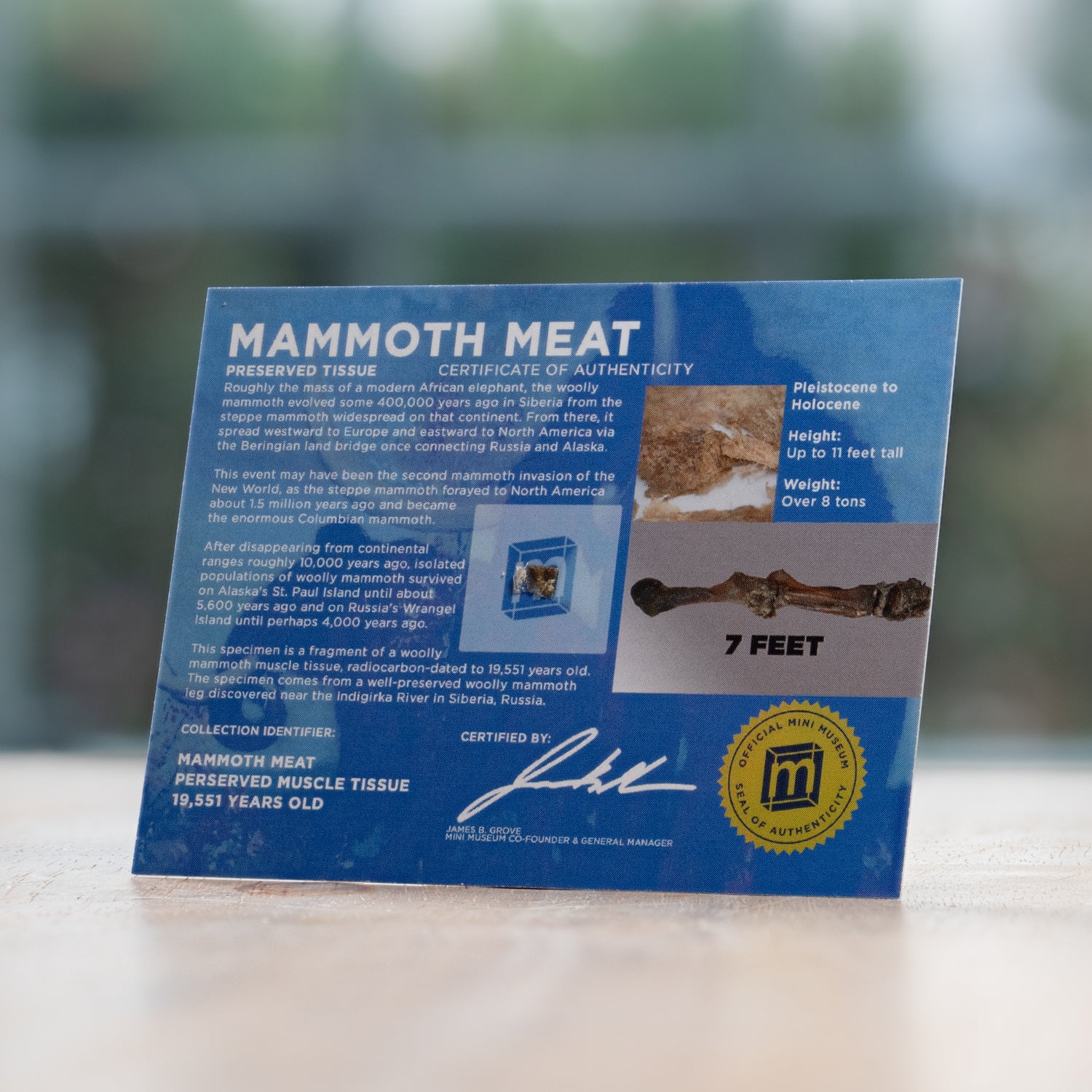
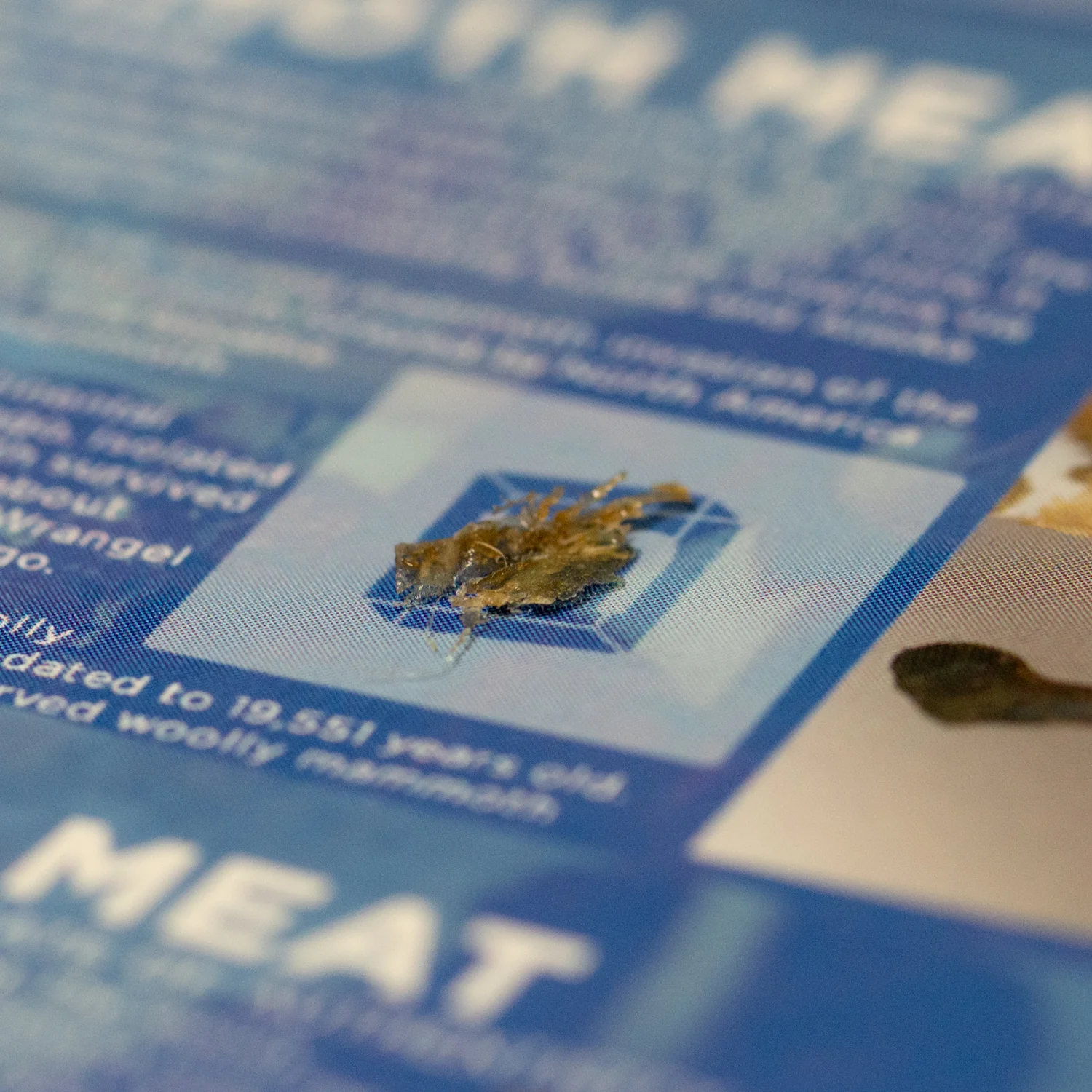
This specimen is a fragment of a woolly mammoth muscle tissue, radiocarbon dated to 19,551 years old. The specimen comes from a well-preserved woolly mammoth leg discovered near the Indigkra River in Siberia, Russia. It first appeared in the Second Edition of the Mini Museum. We're pleased to offer it once again as a single specimen.

Above: The original leg as discovered in Siberia. This piece is now displayed in a museum in Japan.
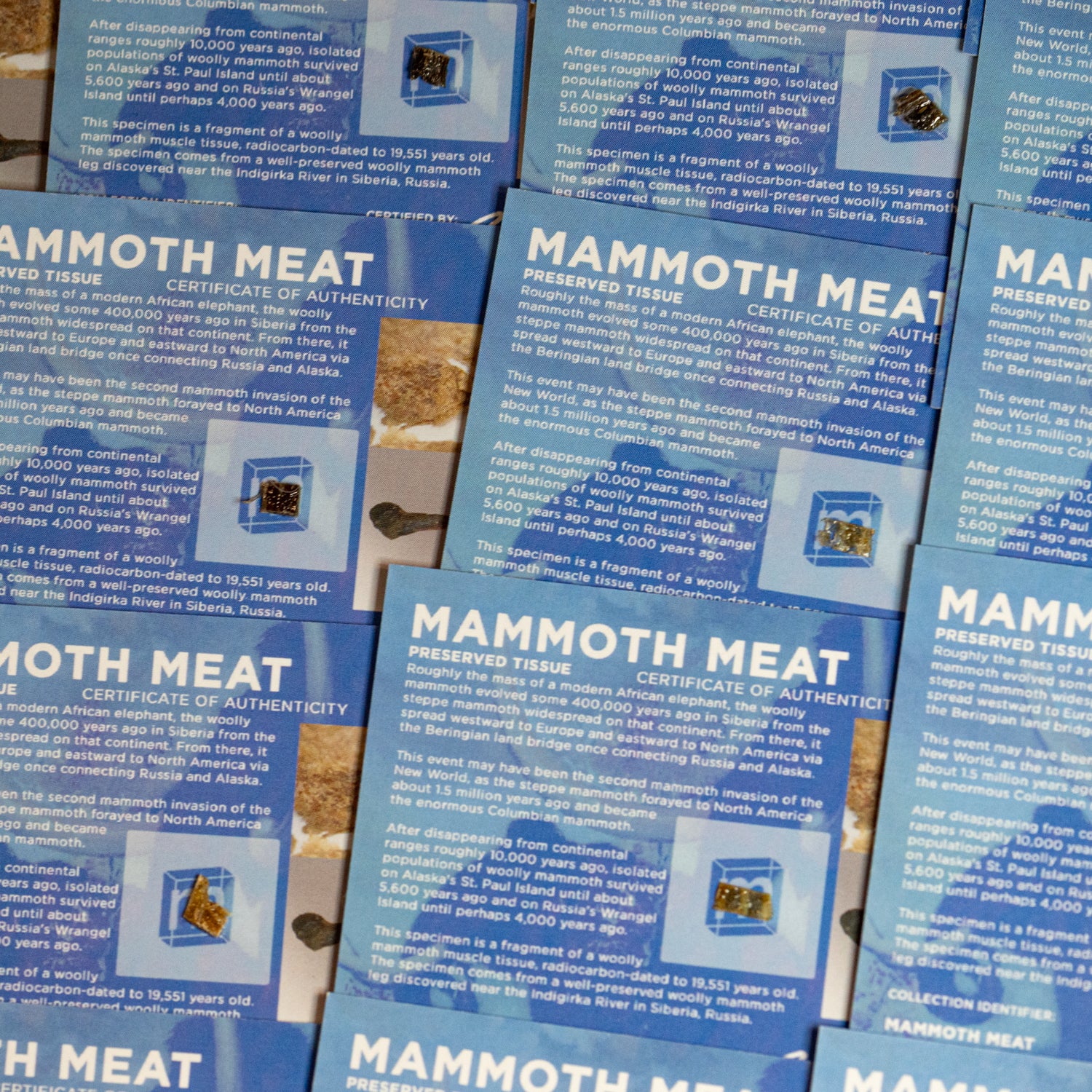
As you might expect, each tissue fragment is unique. The pieces vary widely in size, shape, color, and texture. We do not recommend or endorse the consumption of this item. It is not food. It is a display piece.
More Images
Mammoth Meat - Display Card
Radiocarbon-dated to 19,551 years old!
"Various legends exist about frozen mammoths. It has been said that the scientists who excavated the Beresovka mammoth, discovered in the year 1900, enjoyed a banquet on mammoth steak. What really appears to have happened is that one of them made a heroic attempt to take a bite out of this meat but was unable to keep it down, in spite of a generous use of spices." ~ Björn Kurtén in "How to Deep Freeze a Mammoth"
This specimen is a fragment of a woolly mammoth muscle tissue, radiocarbon dated to 19,551 years old. The specimen comes from a well-preserved woolly mammoth leg discovered near the Indigkra River in Siberia, Russia. It first appeared in the Second Edition of the Mini Museum. We're pleased to offer it once again as a single specimen.
Above: The original leg as discovered in Siberia. This piece is now displayed in a museum in Japan.
As you might expect, each tissue fragment is unique. The pieces vary widely in size, shape, color, and texture. We do not recommend or endorse the consumption of this item. It is not food. It is a display piece.
Product Information
Product Information
Shipping & Returns
Shipping & Returns
Description
Radiocarbon-dated to 19,551 years old!
"Various legends exist about frozen mammoths. It has been said that the scientists who excavated the Beresovka mammoth, discovered in the year 1900, enjoyed a banquet on mammoth steak. What really appears to have happened is that one of them made a heroic attempt to take a bite out of this meat but was unable to keep it down, in spite of a generous use of spices." ~ Björn Kurtén in "How to Deep Freeze a Mammoth"
This specimen is a fragment of a woolly mammoth muscle tissue, radiocarbon dated to 19,551 years old. The specimen comes from a well-preserved woolly mammoth leg discovered near the Indigkra River in Siberia, Russia. It first appeared in the Second Edition of the Mini Museum. We're pleased to offer it once again as a single specimen.
Above: The original leg as discovered in Siberia. This piece is now displayed in a museum in Japan.
As you might expect, each tissue fragment is unique. The pieces vary widely in size, shape, color, and texture. We do not recommend or endorse the consumption of this item. It is not food. It is a display piece.